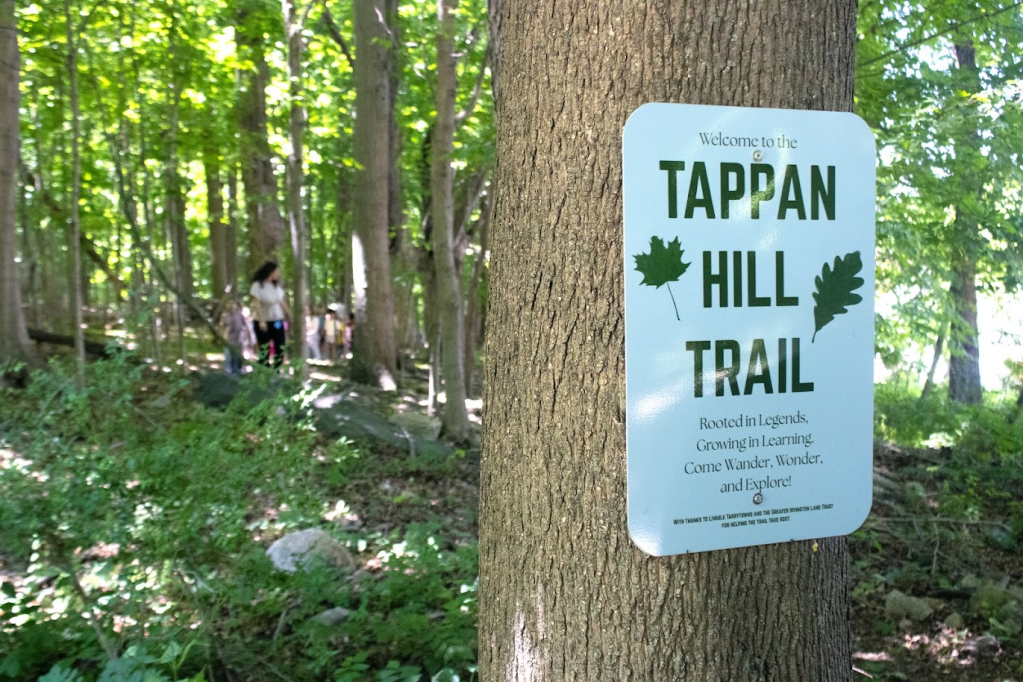
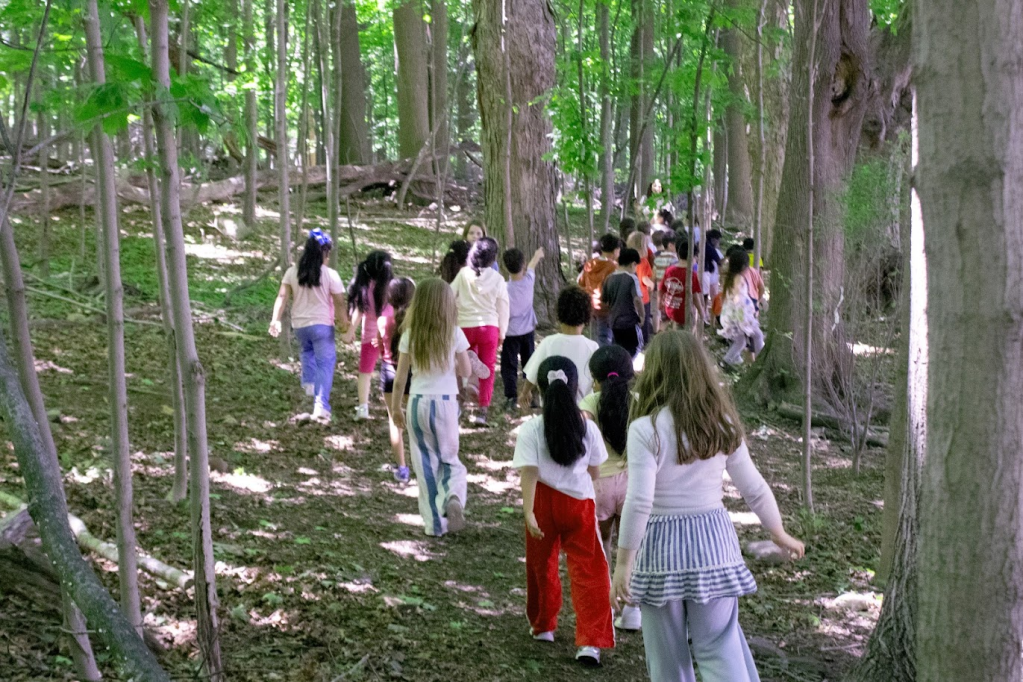
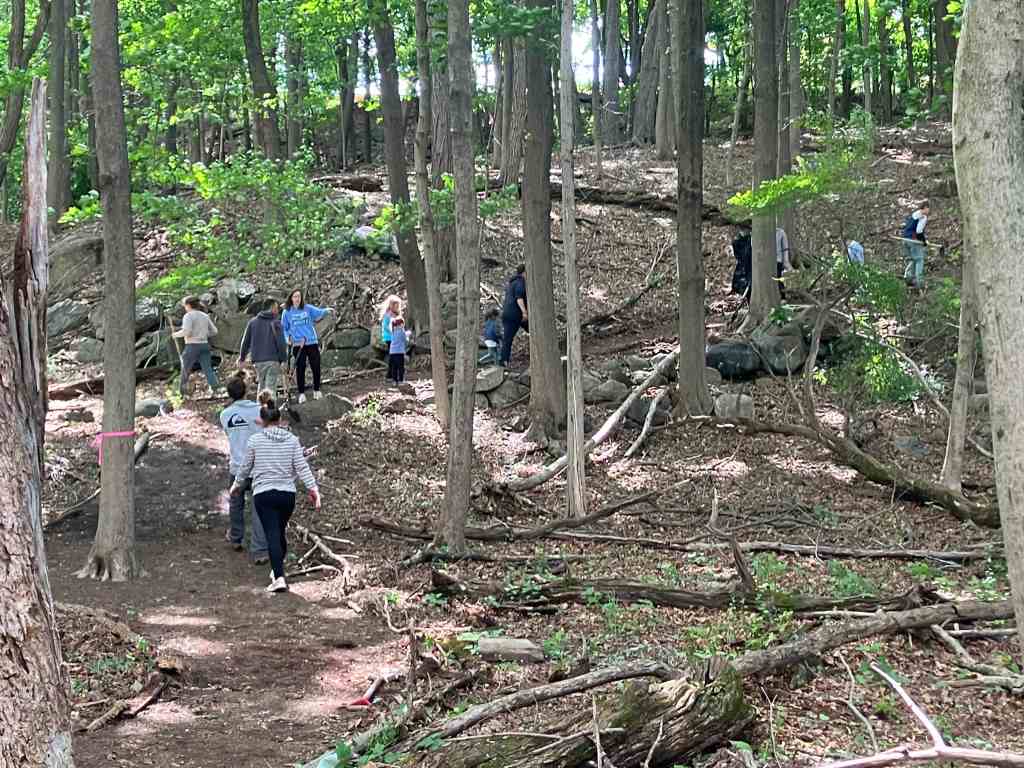
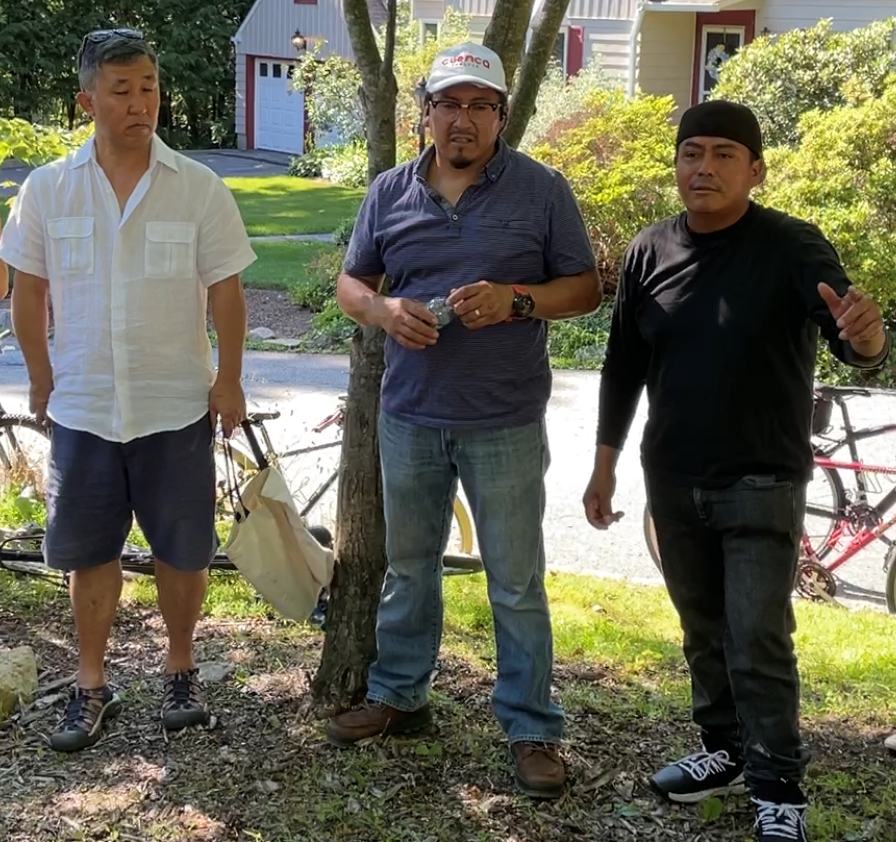
On the morning of Friday, May 29, 2026, students from the Tappan Hill School gathered in the wooded area that is part of its campus. Joining them were Raymond Sanchez, Superintendent of the Public Schools of the Tarrytowns (TUFSD), members of the Board of Education, school administrators, and residents from Sleepy Hollow and Tarrytown. They were there for the official opening of the Tappan Hill Trail.
Tappan Hill students enjoying the trail, May 29, 2026. Credit: Public Schools of the Tarrytowns.
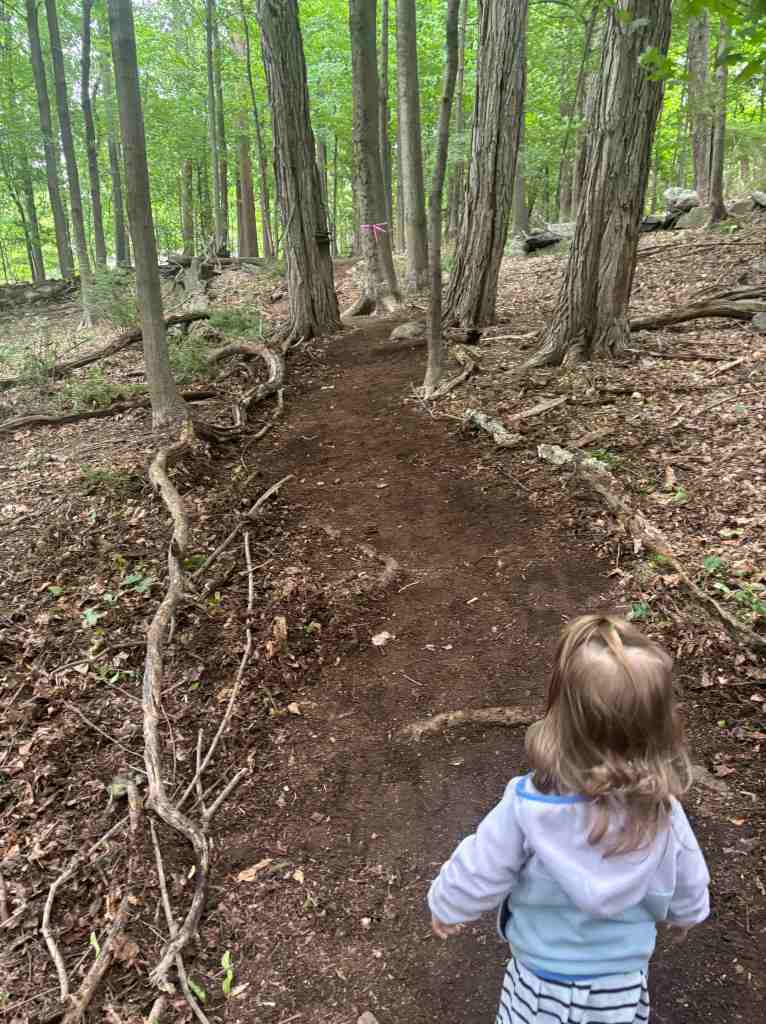
In the words of the TUFSD, the trail “gives students a dedicated outdoor space to explore nature, engage in hands-on learning, and build a real connection to the environment around them.” The school district also asserts that the winding path is “designed not just to connect nearby neighborhoods to campus, but to spark curiosity and a love of the outdoors in the students who walk it.”
“A new path is winding its way through Tappan Hill School—one designed not just to connect nearby neighborhoods to campus, but to spark curiosity and a love of the outdoors in the students who walk it.” —Public Schools of the Tarrytowns
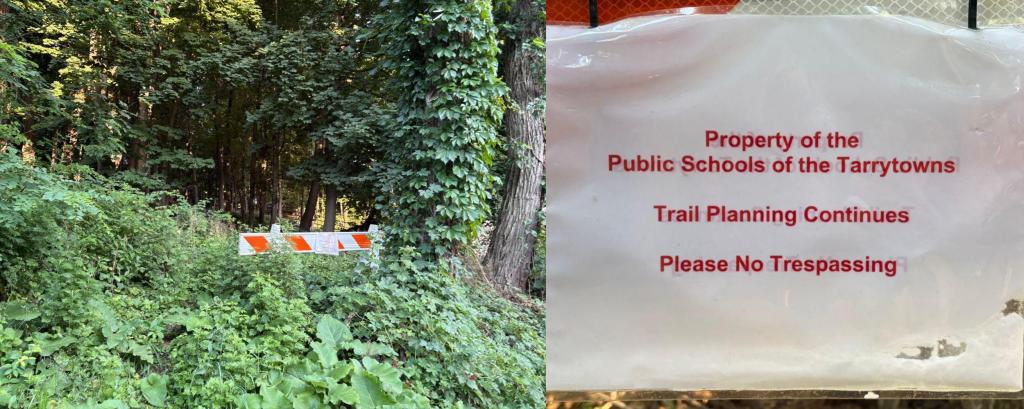
The statement speaks to a key goal of the trail: to provide students, caretakers, and family members a safe and enjoyable walking route between Ichabod Lane and Rosehill Avenue and thus encourage more people to walk to and from the school. However, a barrier at the Rosehill end of the trail currently prevents this from happening.
Barrier at now-overgrown Rosehill Avenue end of the Tappan Hill Trail and the accompanying sign, June 29, 2026. Credit: Livable Tarrytowns.
Volunteers constructing the trail on May 31, 2025. Credit: Livable Tarrytowns.
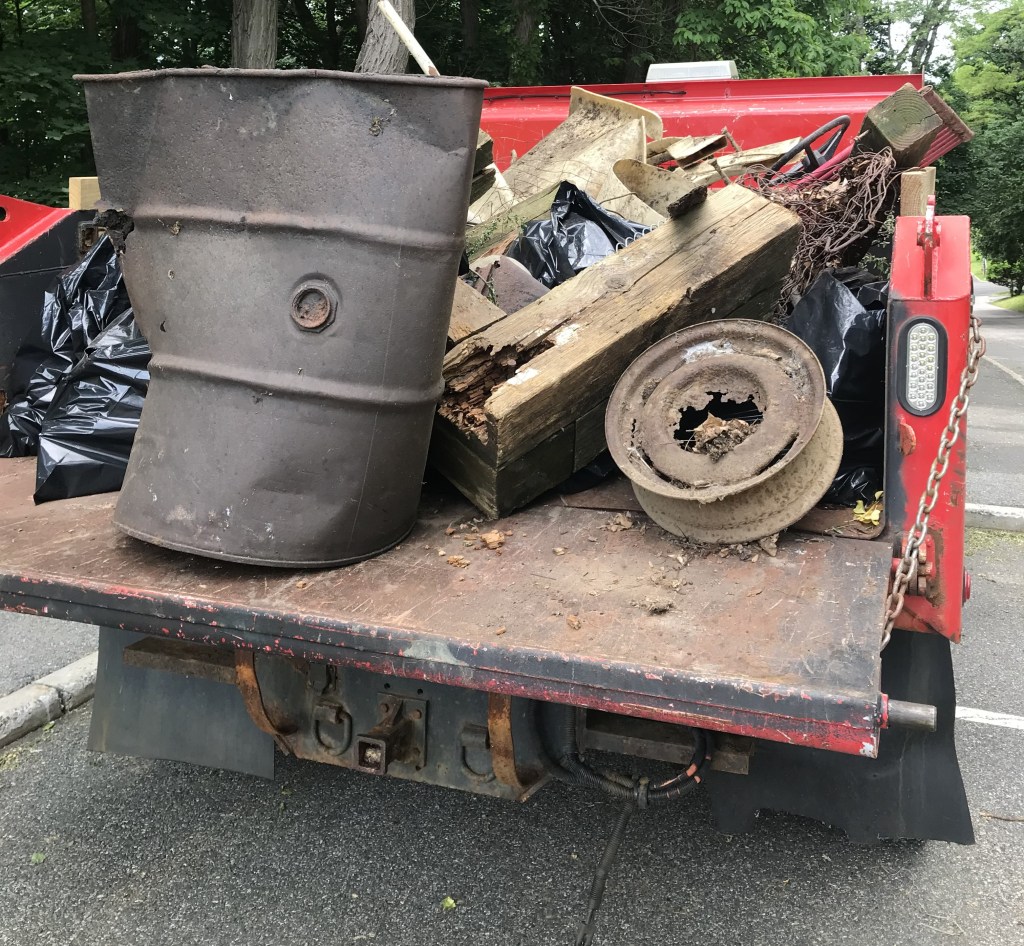
Trash removed from Tappan Hill woods, May 31, 2025. Credit: Livable Tarrytowns.
While minor work remained (and still does)—particularly, the building of a small set of stairs and a landing at the Rosehill end given the trail’s steepness there—the TUFSD and the Village of Tarrytown have failed in the 13 months since the trail was built to see through its completion.
In December 2025, for example, Tarrytown’s Board of Trustees passed a resolution asserting that the school district had to receive Village approval for construction of any connection between the school property and Rosehill Avenue. More than six months later, the school district has not yet submitted the necessary paperwork.
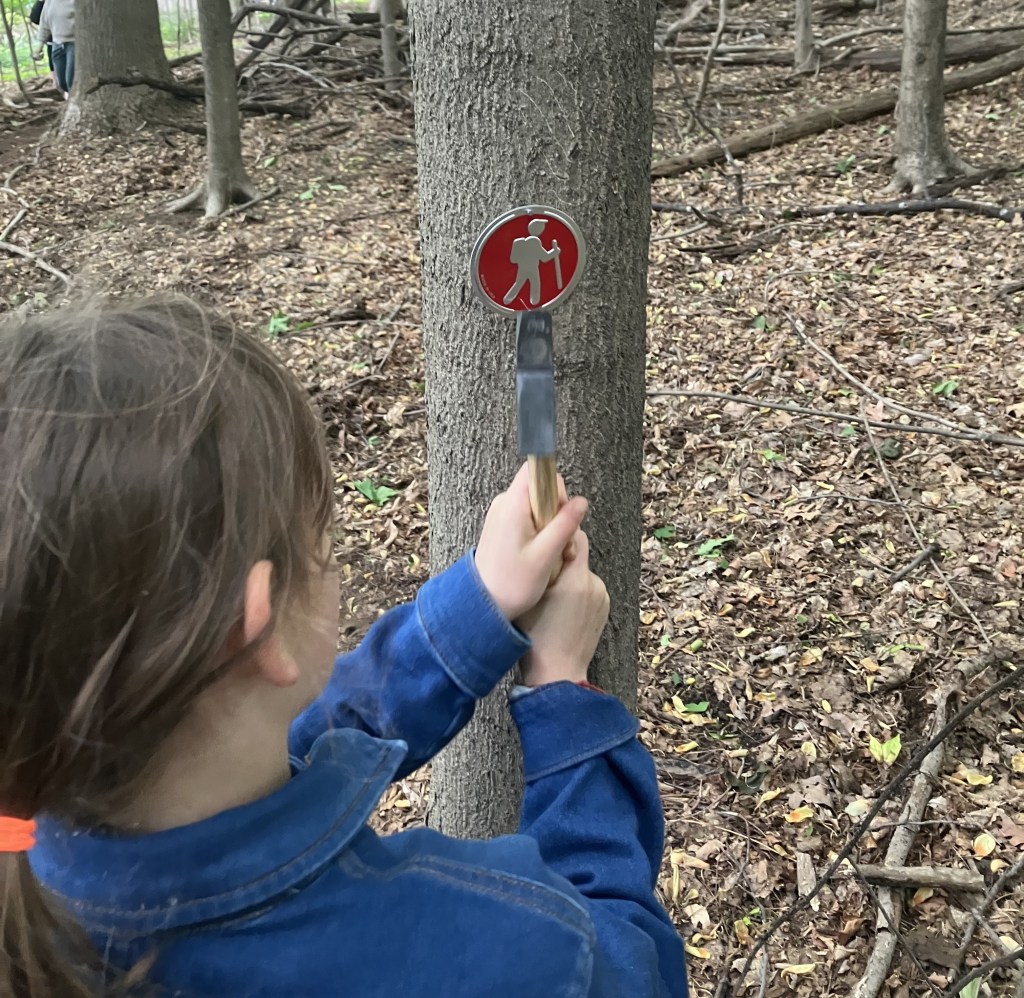
Installing a trail marker, May 31, 2025. Credit: Livable Tarrytowns.
Meanwhile, the Village of Tarrytown has aided and abetted the stalling by suggesting that the trailhead is unsafe due to the lack of sidewalks on Rosehill and a crosswalk near the point of access. It has also failed to implement measures that would bring about a safer pedestrian route to and from there—to remedy the very problems it decries in other words.
Livable Tarrytowns has played a major role in bringing about the trail. Indeed, Elizabeth Tucker, on behalf of Livable Tarrytowns, was a recipient of a 2025 Community Grant from the Greater Irvington Land Trust (GILT) that paid for materials used to construct the trail and to purchase native trees that have been planted.
That the trail has now partially opened speaks to the support it enjoys among many nearby residents, families in both Sleepy Hollow and Tarrytown who have children at Tappan Hill, and individuals throughout the two villages. It also highlights the need to complete the trail before school opens in September so that students and those accompanying them, in addition to the broader public, will have full access to the wooded path.
Whether or not the trail is completed, people will continue to walk to and from the Tappan Hill School. The question is, will the school district (and the Village of Tarrytown) provide a safer, more enjoyable pedestrian route to and from the site than currently exists?
To ensure that it does, Livable Tarrytowns urges readers to contact the Board of Education (boe@tufsd.org), Superintendent Sanchez (rsanchez@tufsd.org), and Tarrytown’s mayor and members of the Board of Trustees (see below) to voice their support for the trail’s completion.
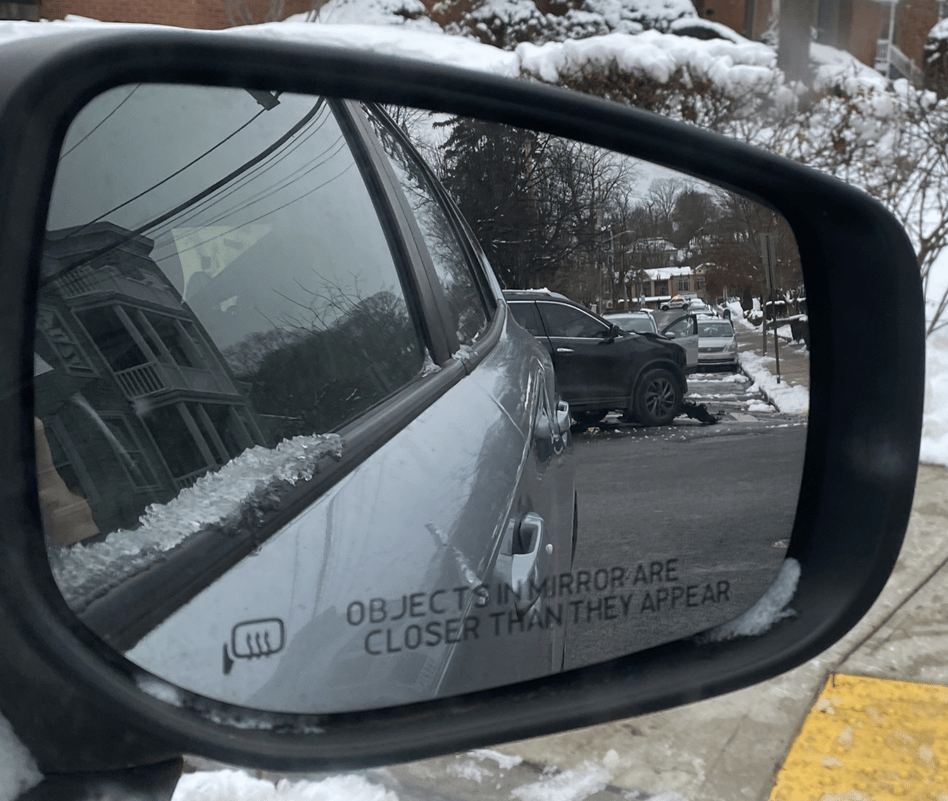
Aftermath of December 15, 2025 crash at Washington and Wildey Streets, as seen through a rearview mirror.
On the afternoon of December 15, 2025, a crash involving three vehicles took place where North Washington Street intersects with Wildey Street.
At around 7 pm on the evening of January 13, 2026, a van speeding northward on Washington Street went through a red light at Central Avenue, turned left, struck a pedestrian in the crosswalk, and fled the scene. (The teenage victim, while incurring significant injuries, survived; and Tarrytown police identified and arrested the driver.)
These collisions are, unfortunately, part of a pattern. According to data from the New York State Department of Transportation, there were eight crashes along Washington Street between 2022 and 2025. The crashes, and those unrecorded by officials (the NYSDOT data did not include the crash on December 15, 2025, for example), serve as a reminder of the dangers associated with the Washington Street corridor.
Washington Street is critical for many reasons. It is the major pedestrian thoroughfare that connects Sleepy Hollow and Tarrytown. On days when the TaSH (our local farmers market) operates, when special events take place in Patriots Park, and during tourist season, use of the street is especially heavy. On a more regular basis, it serves as a crucial point of crossing or access road for children, parents and guardians walking to and from the public schools. It is also important for people going to and from the Warner Library, the Neighborhood House, or C-Town.
Washington Street is also neglected for many reasons. It spans the two villages, allowing each to point a finger at the other. It is hilly, prompting some officials to claim that speed humps would be useless and nothing can be done. And it is used by many drivers as an alternative to Broadway.
Residents of Washington Street and those who frequent the thoroughfare have long expressed concerns about speeding drivers and the associated dangers for pedestrians and bicyclists.
In early 2024, twenty residents of the stretch of North Washington Street between College Avenue and Wildey Street submitted a petition to the mayors of Sleepy Hollow and Tarrytown calling for safety improvements. “We often see and hear cars speeding by,” they wrote. “Parked cars along the street have been damaged and had their mirrors swiped by speeding drivers. We are sometimes scared driving along the curve because it’s difficult to see what’s coming. We are concerned that we or our children could be hit while crossing the road.”
Sleepy Hollow’s Mayor Martin Rutnya had stop signs installed at the intersection of North Washington Street and College Avenue, but he took no additional action. Tarrytown’s Mayor Karen Brown did not respond at all.
Encouraged by Mayor Rutnya’s modest response, residents submitted a second petition to Sleepy Hollow’s government in June 2025. The petition, signed by 25 residents, requested the implementation of traffic calming measures and a “speed hump” close to the border with Tarrytown “to reduce the incidence of drivers traveling at excessive speed.” Residents also submitted an online petition that included comments such as this one: “In the past two years my daughter and I have both nearly been hit by cars that drive right through the intersection [on North Washington where it intersects with College Avenue]. Many don’t even slow down at the blinking lights. In the evening cars drive right through the lights as well. I know this because I live right at the intersection.”
“In the past two years my daughter and I have both nearly been hit by cars that drive right through the intersection [on North Washington where it intersects with College Avenue]. Many don’t even slow down at the blinking lights. In the evening cars drive right through the lights as well. I know this because I live right at the intersection.”
Since then, in early January of this year, Sleepy Hollow installed stop signs at Chestnut and Washington Streets, while also altering the traffic signal at the intersection so that it is always flashing red. This compels all drivers to stop. The change has the added advantage of reducing the tendency of drivers to increase speed as they approach the intersection to “beat the light.”
Meanwhile, the Village of Tarrytown has done nothing along its stretches of the thoroughfare to address the street’s dangers.
Figuring out what to do about Washington Street is undoubtedly challenging. This is one reason why Sleepy Hollow and Tarrytown must work together to make Washington Street safeand do so before someone gets badly hurt.
The good news is, both villages now have professional planners on retainer to assist with such matters.
Below are some remedies that Livable Tarrytowns suggests the villages consider implementing.
Speed bumps and raised crosswalks along Washington.
More stop signs and/or flashing red lights along all of Washington Street (including the intersections with Wildey and Main Streets).
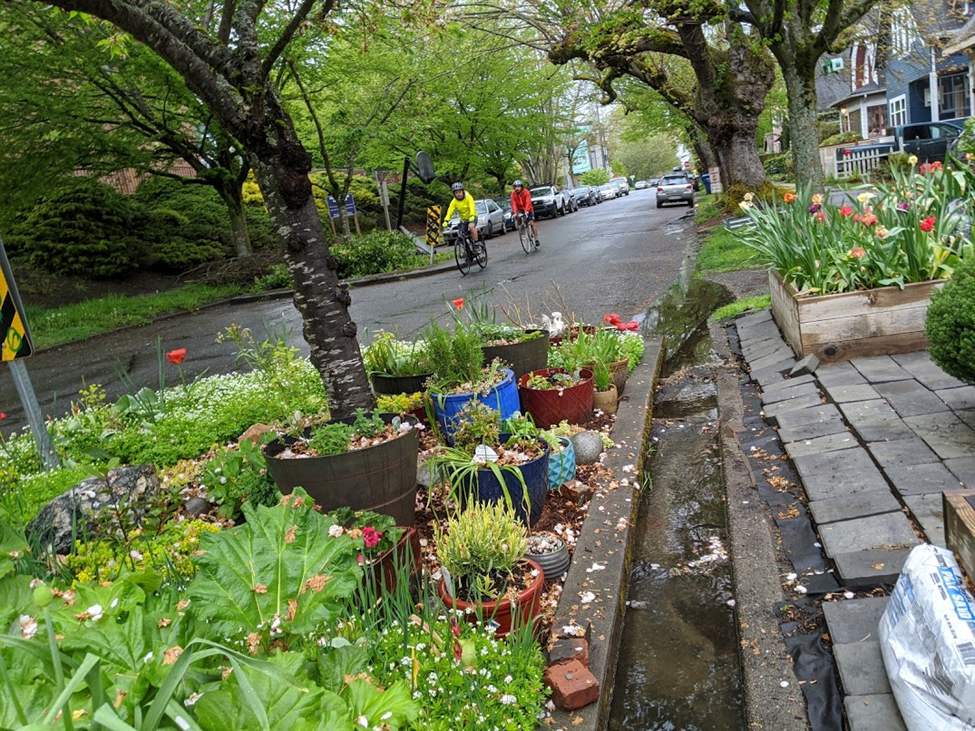
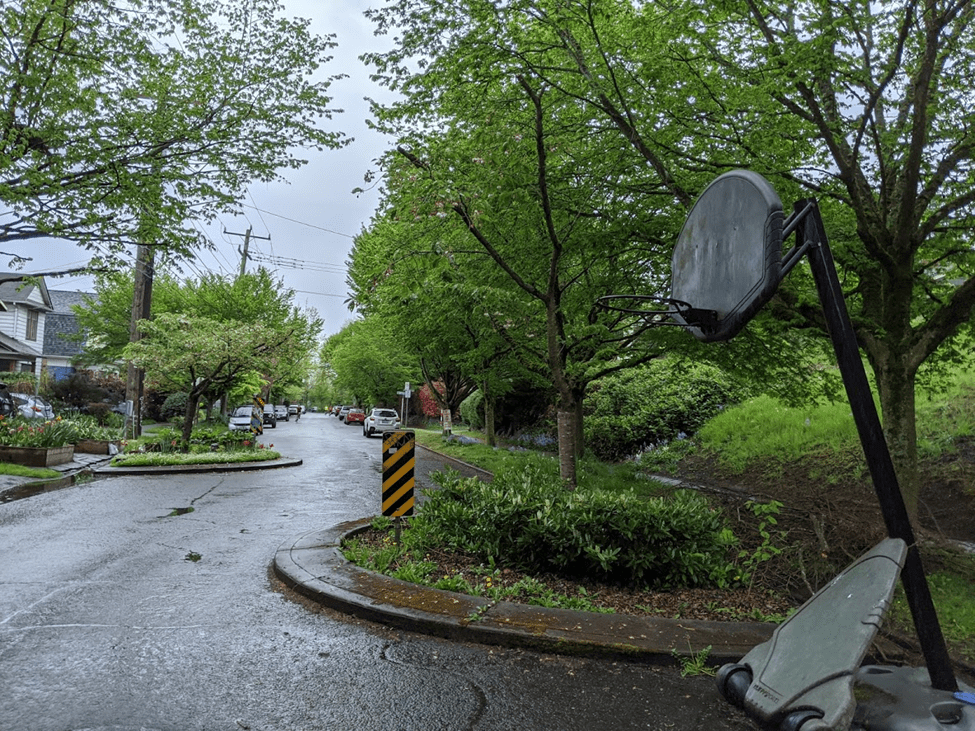
Chicanes—alternating curves or obstacles, like curb extensions, that require drivers to weave left and right and, thus, slow down. (See examples below.)
Beyond these short-term measures, a major makeover of the thoroughfare so that it prioritizes pedestrians and cyclists. One manner by which to do so is to make different segments of the street one-way (for motor vehicles) in different directions, and install a protected, two-way bike lane.
In addition to constructing chicanes that also act as green infrastructure, a major makeover should include the creation of small spaces, perhaps near intersections, with benches for people to sit down and relax. Washington Street should be more than a road for vehicles and people to pass through; it should be a streetscape for people to enjoy.
We call upon all readers to share their ideas, contact their elected officials, and help us work toward solutions for this important street in our two villages.
Seattle, Washington (above and below) shows that chicanes, when designed well, can help beautify streets, in addition to making them safer.
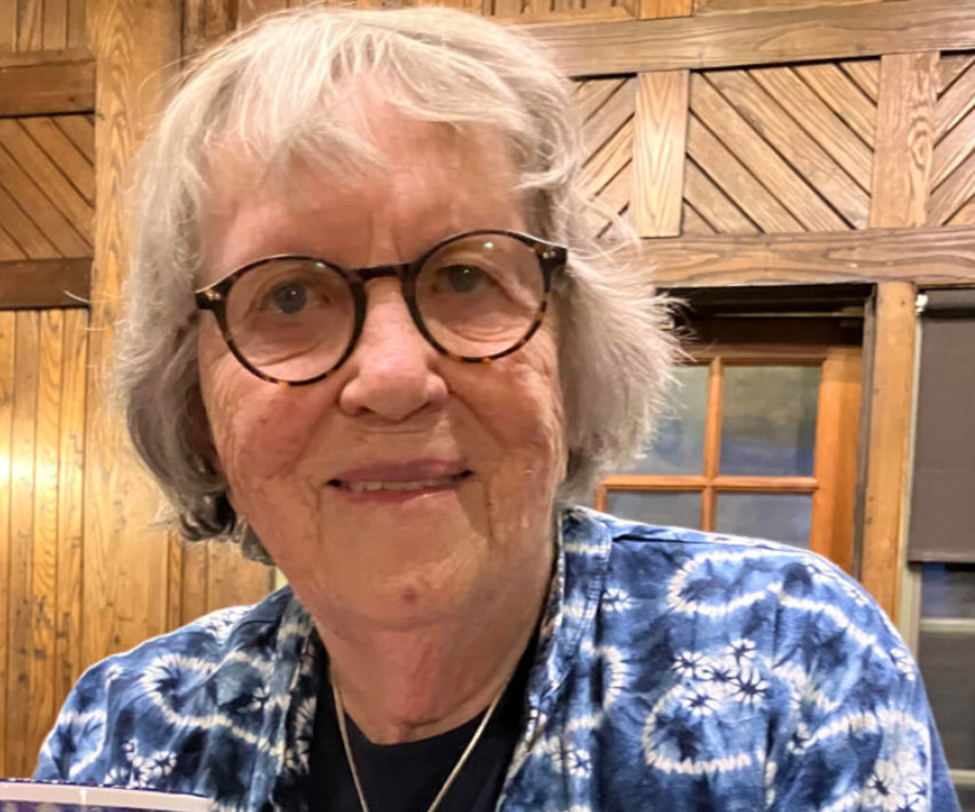
Livable Tarrytowns lost a great friend earlier this month when Anne White passed away.
Anne was a longtime advocate of “complete streets”–at least from the time she moved to St. Paul, Minnesota (in 2003). A former professional photographer and, beginning at the age of 80, a writer of poetry, Anne relocated to Sleepy Hollow in 2016. Over the last few years, Anne was a constant, enthusiastic, and tireless presence at Livable Tarrytowns gatherings. The building of bridges between advocates/activists and village officials was a chief concern of Anne’s.
Anne’s commitment to environmental sustainability and safe streets for all will continue to inspire the work of Livable Tarrytowns. In this way, and in many others, she lives on.
From October 15 through December 15, 2023, Livable Tarrytowns and Bike Tarrytown conducted a pedestrian safety survey. Advertised by way of flyers posted around Sleepy Hollow and Tarrytown, email, and various social media channels, the survey attracted close to 600 responses.
Respondents, many of whom wrote about more than one particular site, raised a total of 785 concerns about unsafe walking locations in the two villages. Not surprisingly, many wrote about the same crossing point, intersection, or street. Still, as shown on the map we generated, survey respondents highlighted over 100 problem areas. In this way, they made clear that problems with pedestrian safety in Sleepy Hollow-Tarrytown are not limited to a small number of intersections or thoroughfares, but are widespread.
“My friends and I came to Tarrytown as tourists for the first time, and the first thing we noticed was how cars don’t yield to pedestrians.”
Pedestrian Safety Survey participant
Numerous people expressed fear about traversing the two villages. As one individual wrote in regard to Central Avenue and Broadway in Tarrytown, “Crossing the street with little kids is terrifying and I see it on the faces of other parents too. Like they don’t really know if they’ll be seen and then have to sprint.” Not surprisingly, the Broadway/Route 9 corridor received the highest number of responses by far. And, as shown in the map generated from the results, a small number of areas along that corridor received the lion’s share of attention. (Many thanks to Neil Curri, a cartographer and GIS Lab Manager at Vassar College, for donating his time and skilled labor and producing the map.)
“Crossing the street with little kids is terrifying and I see it on the faces of other parents too. Like they don’t really know if they’ll be seen and then have to sprint.”
Survey respondent re: Central Avenue and Broadway in Tarrytown
There are two areas of greatest concern along Broadway.
Partial view from Broadway of the intersection. Bedford Road is to the right, New Broadway in straight ahead, and Route 9, heading northward bends to the left. Source: Screen shot of video produced by Bike Tarrytown.
The first is the five-way intersection (of sorts) where Bedford Road, Beekman Avenue, Hudson Terrace, and New Broadway all converge with Broadway/Route 9 in Sleepy Hollow, a highly dangerous area of longstanding concern among local residents. Respondents suggested various traffic-calming “fixes” to this highly dangerous area, ones ranging from raised crosswalks to pedestrian-activated strobe lights. Over the years, Bike Tarrytown has also made many recommendations, including curb extensions, for the area.
The second is where McKeel Avenue and Broadway converge. As reported in our previous blog post, Bike Tarrytown and Livable Tarrytowns have come up with concrete proposals–short-term and long-term–to transform the intersection, one that has proven deadly for pedestrians on two occasions since August 2022.
While there are many other areas in need of attention, we briefly mention four more that survey respondents highlighted.
Neperan Avenue and the Old Croton Aqueduct Trail (Tarrytown): Vehicles parked immediately adjacent to where the trail crosses Neperan on the north side of the street block the line of sight. There are also no markings indicating that where the OCA and Neperan intersect is a crossing location for pedestrians and cyclists. A curb extension or “pinchpoint” on the north side of Neperan, a raised crosswalk and signage–among other changes–are desperately needed.
Bedford Road, Webber Avenue, and the Old Croton Aqueduct (Sleepy Hollow): This is a key school route for students and their families. It is also where the aqueduct trail enters the TUFSD campus. Due to the lack of a crosswalk, the speed of cars coming down the hill, and the low visibility due to curves, this is a hazardous crossing location for pedestrians.
Depot Plaza and West Main Street at Railroad Avenue (Tarrytown): Due to many people walking to and from the train station, this is a heavily pedestrianized area. Of high concern are the two crosswalks that connect the Metro North station and Tarrytown Village Hall. Drivers frequently speed and ignore pedestrians within the crosswalks or block the crosswalks (particularly on the station side of the street) with their vehicles. Some simple engineering–curb extensions and raised crosswalks, for example–could greatly enhance pedestrian safety in the area. Also unsafe is the west (river) side of the station, at the bottom of the H-bridge, where West Main and Railroad Avenue meet. An area of frequent speeding, there is a need for wider sidewalks, additional crosswalks, and traffic calming interventions in the general area.
Franklin Street and Broadway (Tarrytown): Students and their families walking to and from the Washington Irving Intermediate School have to cross two busy streets that are heavily trafficked. According to reports received by Livable Tarrytowns, there have been a lot of “close calls” at this intersection and it is in need of urgent attention and remediation.
“[The villages] are not safe for anyone: sidewalks are terrible, a hazard, especially to [those who are] impaired, disabled, kids, and seniors.”
“It’s truly shameful how poor pedestrian infrastructure is on the main route for train commuters.”
Respondents to the Pedestrian Safety Survey
How to view the map
The map is a compilation of all the responses to the survey that we received. If you click on the image below, it will bring you to the interactive map.
It is a “heat map.” A heat map shows the relative number of responses received by locations. In this case, yellow indicates the highest number of responses in an area, followed by red, and then purple (light purple being a relatively low number).
Viewers can control the size of the map via the “zoom” features (the “+” and “-” signs in the upper right corner.
A yellow dot indicates a location that at least one survey respondent raised concerns about. If you click on one of them, a box such as that to the right will emerge. In the bottom right corner, it indicates how many respondents wrote about the location (four in the case of Beekman and Pocantico). Viewers can scroll through the various responses using the arrows in the bottom left corner, and thus how survey takers described the problem, their suggestions for improvements, and any other comments.
This is a local road with 30 mph speed limits, not a highway. Why is it designed like a highway?
Survey respondent re: White Plains Road in Tarrytown
Next steps
On Saturday, February 24, 2024, Livable Tarrytowns had a meeting at the Warner Library to present and discuss the results of the survey. Twenty-five residents of Sleepy Hollow and Tarrytown were in attendance.
In the second half of the gathering, attendees organized themselves into three groups to focus on specific problem areas. Group members brainstormed about the changes they would like to see and how to bring them about–by working with local and state officials as well as with residents and non-governmental entities in the area. These groups are now standing bodies under the umbrella of Livable Tarrytowns, each of which has a particular focus.
The three groups are:
The School Safety Zone Working Group: Its focus is the slowing down of traffic in the vicinity of all schools in the Tarrytowns and the development of safe walking and cycling routes to and from those schools–both of which require changes in the streetscape and the associated infrastructure.
The Broadway for All Working Group: While the entire Broadway corridor in Sleepy Hollow and Tarrytown is the group’s concern, its initial focus is on Broadway and McKeel. Its broader goal is to transform Broadway so that it a safe and enjoyable thoroughfare for pedestrians and bicyclists alike.
The Old Croton Aqueduct Working Group: This group concentrates on where the aqueduct trail intersects streets to ensure that crossing locations are safe for pedestrians. Its initial focus is on where the trail crosses Neperan Road in Tarrytown and Bedford Road in Sleepy Hollow.
If you would like to join a working group (or start one of your own), please send an email to livabletarrytowns@gmail.com.
In the coming weeks and months, Livable Tarrytowns will share the survey findings with officials in the two villages and the public school district. The survey is one tool among many that we need to deploy to win support for far-reaching changes needed to make the villages’ thoroughfares–and public space more broadly–safe and welcoming to all, particularly for the most vulnerable among those who live and work here.
Postscript:River Journal ran an article about the survey and the findings. You can find the article here.
Ghost bike memorial to Luis Ángel Zhizhpon Quinde, Millard Avenue at Broadway/Route 9. Photo by Sayako Aizeki-Nevins.
Late afternoon on Saturday, June 25, 2022, residents of Sleepy and Hollow and Tarrytown gathered at the end of Millard Avenue where it meets Broadway. Most of the two dozen or so attendees had biked there after meeting at the Morse School and riding slowly through downtown Sleepy Hollow, escorted by members of the Village’s police department.
Humberto Quinde (right) welcoming attendees, flanked by Sleepy Hollow Trustee René León (center) and Tarrytown Trustee David Kim. Photo by Sayako Aizeki-Nevins.
The purpose of the bike procession and the gathering were to remember the life and death of Luis Ángel Zhizhpon Quinde. Ten years ago, on the night of June 25, 2012, a car struck and killed the 28-year-old Sleep Hollow resident as he rode his bicycle on Broadway (Route 9) while returning from work at a restaurant.
One of Luis Zhizpon’s uncles, Humberto Quinde, opened the brief ceremony by thanking those in attendance for coming and the Sleepy Hollow Police Department for their assistance. He also expressed his gratitude for Bike Tarrytown’s donation of a ghost bike, a roadside memorial placed near the location where Zhizhpon was hit.
José Quinde (left): The ghost bike is “a symbol for life, not just for now.” Photo by Sayako Aizeki-Nevins.
José Quinde, another uncle, called the ghost bike “a symbol for life, not just for now.” Speaking in Spanish, he expressed hope that people maintain the memorial and gather there each year to remember his nephew and the tragedy that befell him.
According to Dan Convissor, the head of Bike Tarrytown, the Sleepy Hollow stretch of Broadway averages twenty-four crashes and seventeen injuries each year. While many residents of Sleepy Hollow and Tarrytown want to ride bicycles in and between the two villages, dangerous roads, he asserted, “make people too scared to bike.”
Ten years ago, in the wake of Zhizhpon’s killing, Sleepy Hollow Mayor Ken Wray called the stretch of Broadway a “death trap,” according to the Tarrytown Sleepy Hollow Daily Voice. “Wray noted several intersections are particularly dangerous, including a five-way intersection of Beekman, Route 9, Route 448, Webber Park and Hudson Terrace,” reported the online publication.
Ten years later, that five-way intersection and Broadway/Route 9 remain as dangerous as ever.
For such reasons, Dan Convissor urged those in attendance on Saturday to support the Route 9 Active Transportation Project. The Village of Sleepy Hollow, he pointed out, has a plan to improve Route 9, but it falls far short of what is need, covering only a two-block area and without addressing the needs of cyclists. “So, I encourage you to push Sleepy Hollow to build a Broadway for everybody,” he said.
The ghost bike, a simultaneously beautiful and poignant tribute to the memory of Luis Ángel Zhizhpon Quinde, sits at the end of Millard Avenue, just across from the site on Broadway where he was struck on June 25, 2012.
It is past time for another memorial: a re-designed Broadway, one safe for pedestrians and cyclists, as well as for drivers.
Many of the attendees at the ceremony, including friends and members of the Quinde family.