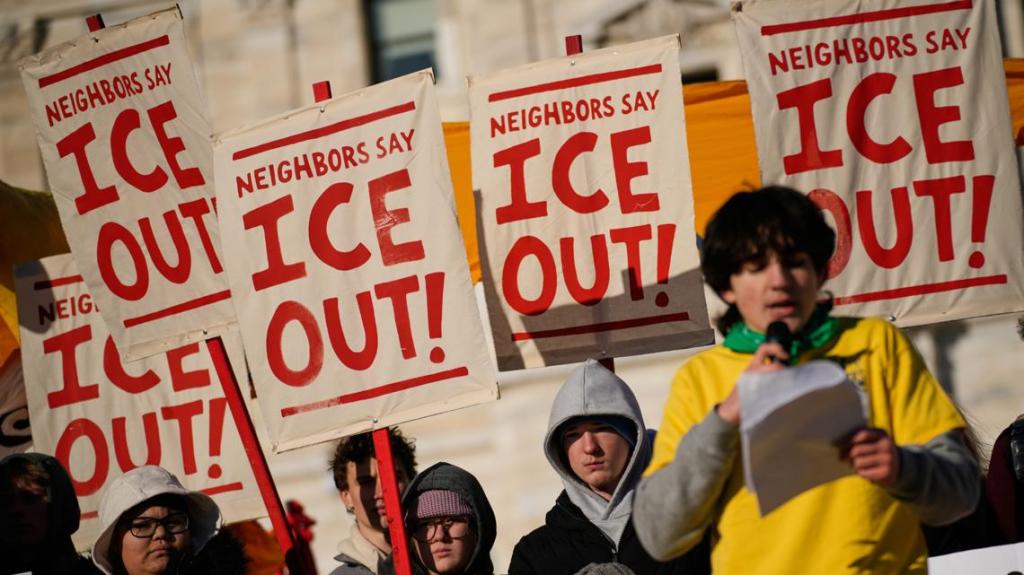
I first heard Trump compared with Hitler during the pandemic. It was a German neighbor who said it. I was horrified and insisted on what I then considered to be important differences. I am a German translator and at the time had been working on preparing primary source documents related to the Holocaust for a database maintained by the German Historical Institute. The terrorizing of people identified as foreign, which has driven people into hiding for fear of being captured on their way to work or while picking up their children from school, leaves me no choice but to agree with my neighbor. Such comparisons have now become commonplace. In the German media, ICE is referred to as a “paramilitary organization.”
But a clear alternative has been shown in the recent events in Minneapolis. In an article in The Atlantic of January 26, the journalist Adam Serwer used the word “neighborism” to identify the shared conviction that has motivated residents’ commitment to protecting people with whom they live side by side. Serwer contrasts this with the xenophobic attitude driving the ICE crackdown across the United States as articulated by the U.S. vice-president, JD Vance. On an October 29, 2025, podcast, the U.S. vice-president said: “It is totally reasonable and acceptable for American citizens to look at their next-door neighbors and say, ‘I want to live next to people who I have something in common with. I don’t want to live next to four families of strangers.’”
In Minneapolis, we have seen the brave actions of people who believe that the simple sharing of space with others—living near to them, the condition of being a neighbor—is the strongest commonality. Frauke Steffens, a New-York based writer for the Frankfurter Allgemeine Zeitung, observes that through the practice of neighborism as Serwer describes it, “community becomes a political concept” that “offers an alternative vision for the future than that of MAGA.”
We are motivated to do the work we do at Livable Tarrytowns because of how it contributes to the political concept of community. Livable Tarrytowns is founded on the principle that the shape of our villages fundamentally influences how we interact with one another. Roads with fast traffic, no sidewalks, and inadequate public transit have long served as physical barriers that enforce the “neighborhood” as a domain of the economically and racially similar. A lack of affordable housing pushes entire neighborhoods beyond the municipal boundary.
Communities are created not through socioeconomic equivalence or by excluding those who are different. Communities arise through acknowledging our differences at the same time as we work to maintain what we hold in common. When we share the sidewalk, we are able to notice one another, exchange a greeting, or sometimes have a longer conversation. Villages that encourage this through their design make us better able to recognize our shared humanity.
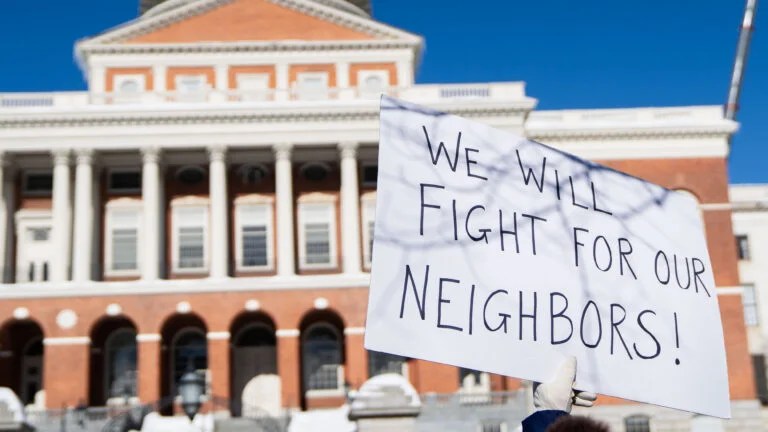
In the weeks, months, and years to come, we will do what we can to make our public spaces welcoming and keep our villages safe for our neighbors.
—Elizabeth Tucker
 Livable Tarrytowns